


Most houseplants in Indian homes are not killed by neglect. They drown. A plant that needed a drink every three days in May can rot on exactly the same routine in August, because the season has changed while the watering habit has not.
This guide replaces the one-size-fits-all “water once a week” rule with a calendar built around the four seasons the India Meteorological Department uses: pre-monsoon summer, monsoon, post-monsoon and winter. Inside: how often to water in each season, a one-minute soil check, plant-by-plant timings and the best water to use, rooted in Bengal’s humid climate with notes for drier North Indian homes and the coasts.
How often should you water indoor plants in India?
Most indoor plants in India need water every 4 to 7 days in the pre-monsoon summer (March to May), every 8 to 14 days during the monsoon (June to September), every 7 to 10 days after the monsoon (October to December) and every 10 to 14 days in winter (January and February).
Treat these numbers as starting points, not rules. Water only when the top 2 to 3 cm of soil feels dry, then soak the pot until water runs out of the drainage hole.
The type of plant shifts the timing more than anything else:
- Moisture lovers such as peace lily, ferns and calathea dry out fastest and may need a drink every 2 to 4 days in peak heat.
- Everyday foliage plants such as money plant, areca palm and aglaonema sit in the middle of the ranges above.
- Succulents, snake plants, ZZ and jade store water in their leaves or roots and can go two to five weeks between waterings, depending on the season.
Why does a fixed watering schedule fail in Indian homes?
A calendar cannot see your room. Soil dries at a speed set by heat, light, airflow and the container, and in India each of these swings sharply through the year. Six factors decide how quickly a pot needs refilling:
- Season and humidity. Dry April air pulls moisture out of soil within days, while sticky monsoon air can keep the same pot damp for two weeks.
- A plant beside a bright south or west window uses water far faster than one sitting in a dim corner.
- Pot material and size. Unglazed terracotta breathes and dries quickly, while plastic, glazed ceramic and metal planters hold moisture much longer. Small pots also dry faster than large ones.
- Air conditioners, coolers and fans. Constant airflow dries the surface fast, even when the root zone below is still wet.
- Soil mix. Heavy garden soil holds water like a sponge, whereas an airy blend of cocopeat, perlite and compost drains freely.
- Growth stage. A plant pushing out new leaves drinks more than one that has gone quiet in the cool months.
This is why horticulturists at the Missouri Botanical Garden advise against watering by the calendar and recommend learning each plant’s signals instead.
How can you tell when a houseplant needs water?
Check the soil before you pour: if the top 2 to 3 cm feels dry and the pot feels light, it is time to water.
Any of these four tests takes less than a minute:
- The finger test. Push a finger into the soil up to the second knuckle. Dry and crumbly means water; cool and damp means wait.
- The chopstick test. For deep pots, slide a plain wooden chopstick to the bottom and leave it for a minute. Dark, damp wood or soil clinging to it means the roots still have moisture.
- The lift test. Pick up the pot right after a thorough soak to learn its “full” weight. When it feels noticeably lighter, it is ready again.
- A moisture meter. An inexpensive probe meter removes the guesswork for large floor planters where fingers cannot reach the root zone.
The plant itself also signals thirst. Watch for leaves that droop slightly and perk up within hours of watering, soil shrinking away from the pot’s edge, and succulent leaves that look wrinkled. Once you know these cues, the calendar becomes a reminder to check rather than an instruction to pour.
How often should you water indoor plants in summer (March to May)?
During India’s pre-monsoon summer, most houseplants need water every 4 to 7 days, moisture lovers every 2 to 4 days and succulents roughly every 10 to 14 days.
This is the thirstiest season of the year, as temperatures climb past 35°C across much of the country and long, bright days speed up evaporation.
How the heat behaves depends on where you live. Across the northern and central plains, hot, dry winds strip moisture from soil quickly, so pots near windows can dry out in two or three days. In the humid east and along the coasts, the heat arrives with heavy air, which slows drying a little. Bengal adds a twist: sudden evening Nor’westers, the kalbaishakhi storms, cool the air and can leave balcony pots soaked overnight, so feel the soil the next morning before reaching for the can.
Summer habits that keep plants comfortable:
- Water early in the morning, ideally before 9 am, so roots are fully hydrated before the afternoon heat.
- Do not rush to water a plant that wilts at 3 pm if its soil is still moist. Many plants droop in peak heat to conserve water and recover by evening.
- Pull pots back from hot west-facing glass, where leaves scorch and soil bakes.
- Hanging basket plants dry out fastest of all, since warm air collects near the ceiling and the pot is exposed on every side, so check them every other day.
The best indoor plants for Kolkata homes through summer, monsoon and winter are covered in a separate seasonal guide, useful if you are choosing varieties for a hot, humid flat.
How often should you water indoor plants during the monsoon (June to September)?
In the monsoon, cut watering roughly in half: most indoor plants need water only every 8 to 14 days, and snake plants, ZZ plants and succulents may need it just once in three or four weeks.
Rain rarely reaches indoor pots, but the moisture in the air does. Relative humidity across much of India climbs above 70 to 80 percent, grey skies reduce light, and soil stays wet far longer than it did in May.
This is the season when root rot quietly takes hold. In Bengal, where damp air hangs over flats from June to September, a pot watered on a summer routine can stay soggy for a week or more. Monsoon losses trace back to watering habits far more often than to the rain itself. If you live in and around the city, a local plant nursery in Kolkata can point you to varieties that handle this humidity well.
Monsoon rules worth following:
- Check the soil every three or four days, but water only when the top 3 to 5 cm is dry.
- Empty saucers and decorative outer pots 15 to 20 minutes after watering. Standing water is the leading cause of rot.
- Hold back on fertiliser if growth slows under overcast skies.
- Watch for fungus gnats, tiny black flies that breed in constantly wet soil. They are a reliable sign the pot is staying too damp.
- Collect rainwater in a clean bucket. It is soft and free of chlorine, which makes it excellent for houseplants. Keep it covered so mosquitoes cannot breed, and use it within a week or two.
If your collection struggles every year, plants that grow in the rainy season are listed in our monsoon guide, along with how to keep them healthy through the wettest months.
How often should you water indoor plants after the monsoon (October to December)?
After the monsoon, water most indoor plants every 7 to 10 days, and lengthen the gap gradually as the nights cool.
Most watering guides skip this transition season, yet it causes plenty of trouble because conditions shift week by week.
October often brings a spell of humid heat as the rains withdraw, so plants may briefly need water almost as often as in summer. By late November, shorter days and cooler nights slow growth across the north and east, and soil starts holding moisture longer. Coastal Tamil Nadu and its neighbouring regions are the exception: the northeast monsoon brings their main rains from October to December, so homes there should keep following monsoon-style caution.
- Stretch the interval by a day or two every couple of weeks instead of switching abruptly.
- Use the mild weather to repot plants that have outgrown their containers. Roots recover well now; water lightly afterwards and let the plant settle for a week.
- Plan ahead for festival travel. Durga Puja, Diwali and year-end holidays often mean a week or more away, and the travel tips further down will help.
How often should you water indoor plants in winter (January and February)?
In winter, most houseplants need water only every 10 to 14 days, and dry-loving plants such as snake plant, jade and cacti just once every three to five weeks.
Growth slows sharply, light is weaker, and cold soil takes a long time to dry. Overwatering is especially risky now, because cold, wet roots rot quickly.
Winter looks very different across the country. North Indian homes face chilly nights, dense fog and dry air from room heaters, which can crisp leaf tips while the soil underneath stays cold and wet. Kolkata and the rest of the east get a short, mild winter, and southern and coastal cities barely cool at all, so plants there can stay closer to a post-monsoon rhythm.
- Water around midday, when the room is warmest, and use water at room temperature. Cold water straight from a rooftop tank on a foggy morning can shock tropical roots.
- Keep plants at least a metre from heaters and blowers.
- Lift pots off cold marble or stone floors near doors; a wooden stand or cork mat makes a difference.
- Skip fertiliser until growth picks up again in March.
How often do popular indoor plants need water?
Grouping plants by how much moisture they like is easier than memorising a separate schedule for each. Use the ranges below as a guide and confirm every time with a quick soil check.
Moisture lovers: water when the top 1 to 2 cm is dry
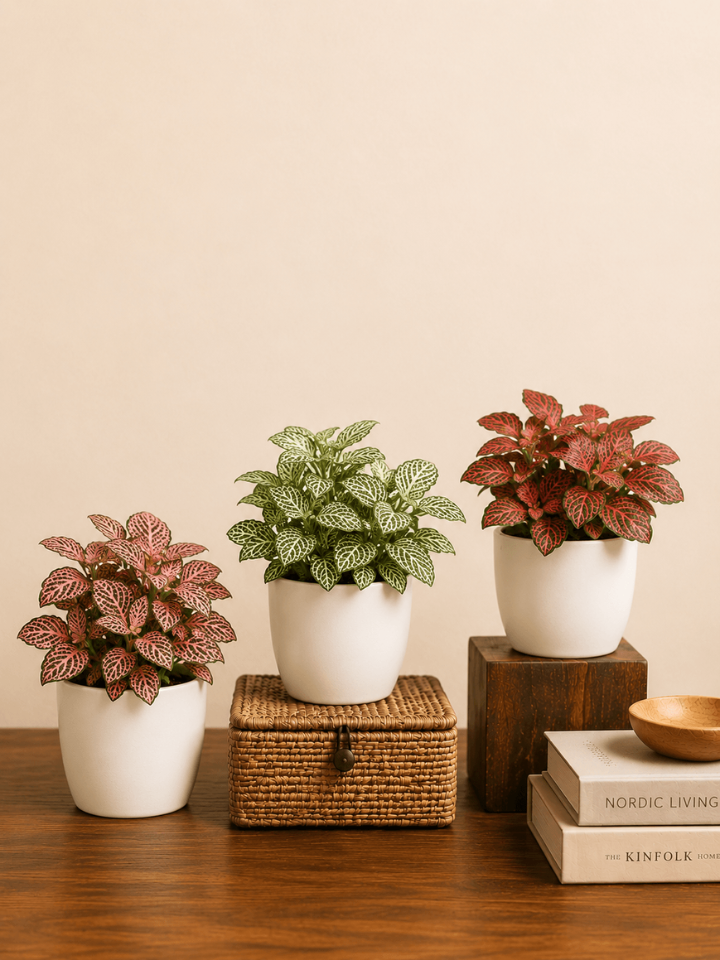
Peace lily watering is the easiest to judge, because the leaves droop visibly when thirsty and lift again within hours of a drink. The feathery Boston compacta fern, the patterned peacock plant and the pink syngonium plant also prefer evenly moist, never soggy, soil. Many of them do well as indoor plants for bathroom windowsills, where steam keeps the air humid.
- Summer: every 2 to 4 days
- Monsoon: every 5 to 7 days
- Post-monsoon: every 4 to 6 days
- Winter: every 6 to 10 days
Everyday foliage plants: water when the top 2 to 3 cm is dry
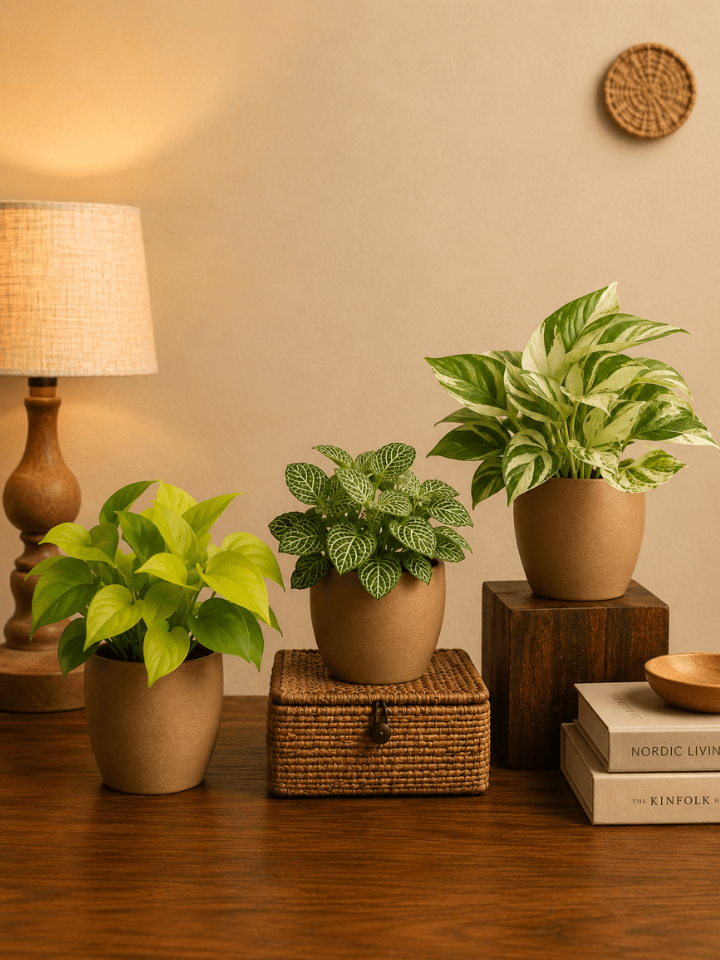
This group covers most of the greenery found in Indian living rooms. Areca palm watering is about consistency rather than volume, while the golden pothos money plant, the red aglaonema plant, the monstera deliciosa plant and the hanging spider plant all forgive a missed day far better than waterlogged roots.
- Summer: every 4 to 6 days
- Monsoon: every 8 to 12 days
- Post-monsoon: every 6 to 9 days
- Winter: every 10 to 14 days
Dry lovers: water only when the soil is dry almost to the bottom
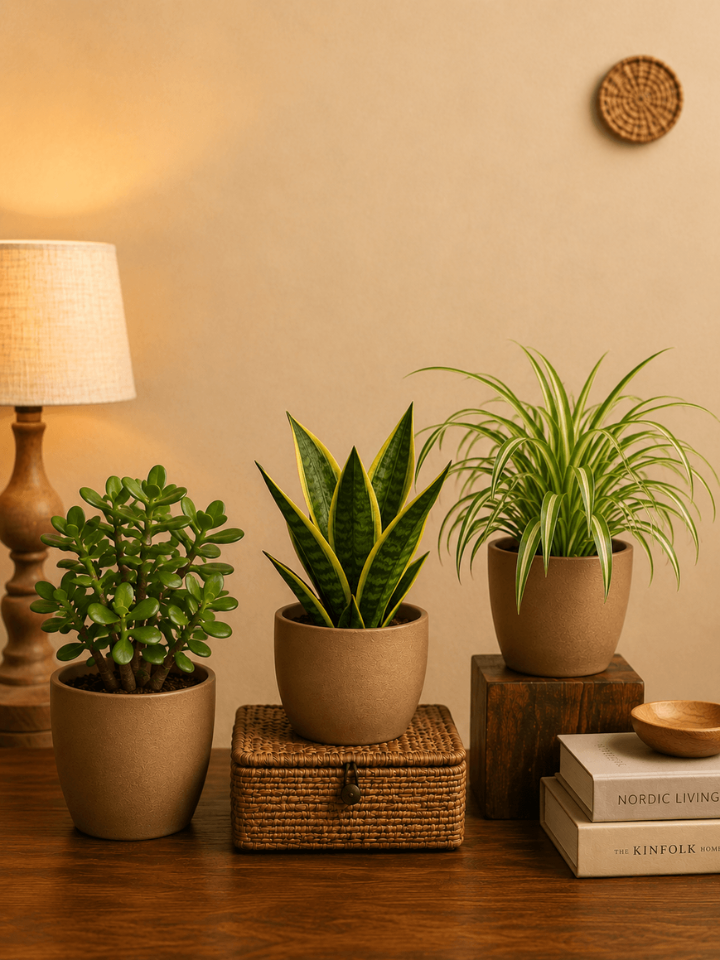
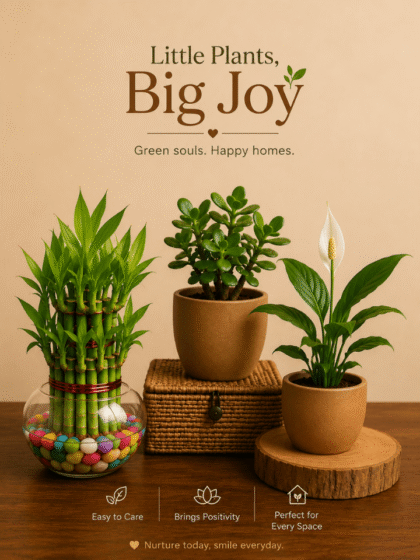
Thick leaves and fleshy roots let these plants ride out long dry spells. How often to water a snake plant comes down to one rule: never water while the pot still feels damp. The same applies to the glossy black ZZ plant, the lucky jade plant, the cathedral window haworthia and any small indoor cactus.
- Summer: every 10 to 14 days
- Monsoon: every 3 to 4 weeks, or not at all during very humid spells
- Post-monsoon: every 2 to 3 weeks
- Winter: every 3 to 5 weeks
Live succulent plants in this group suit sunny windowsills and anyone who tends to forget the watering can.
Plants grown in water
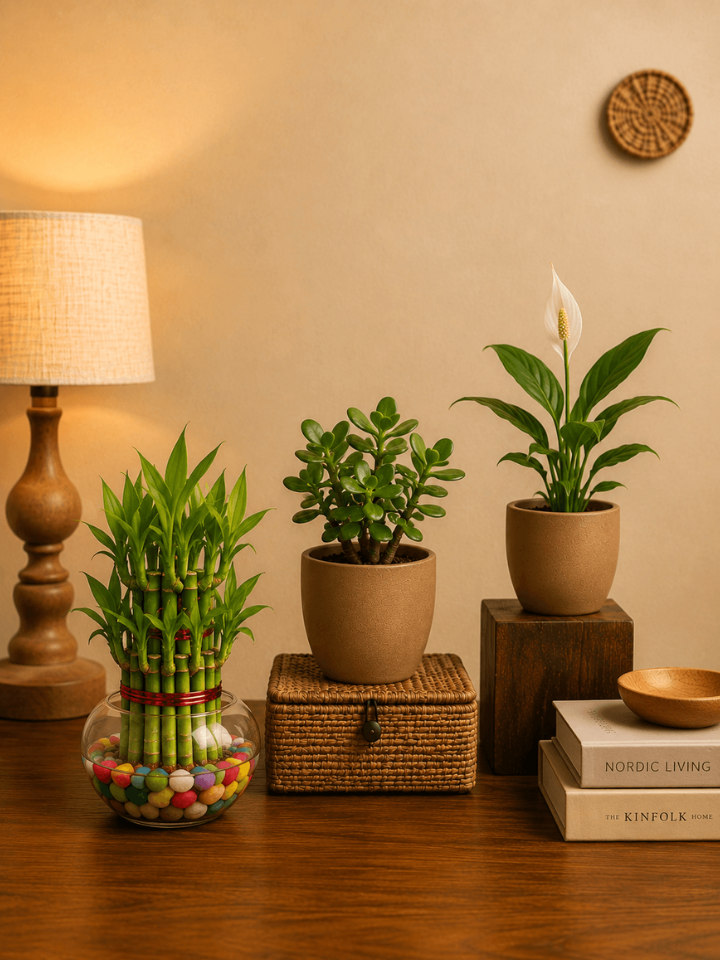
A lucky bamboo plant in water or a money plant in a glass bottle does not follow a soil schedule at all. Top up as the level drops, and replace the water completely every 7 to 10 days, more often in summer if it turns cloudy or starts to smell.
What is the right way to water an indoor plant?
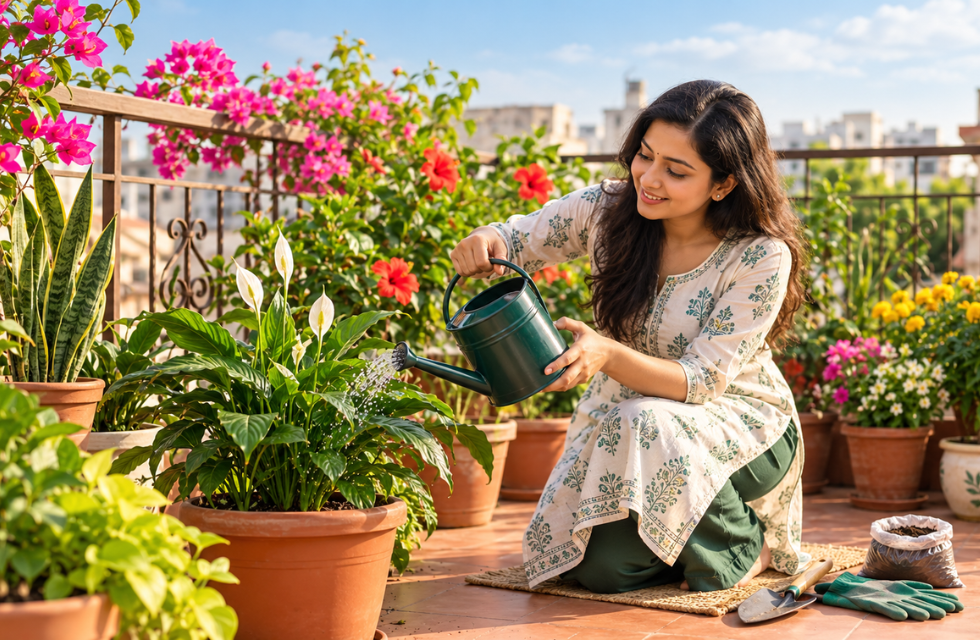
Water thoroughly and infrequently: pour slowly around the base until water runs out of the drainage hole, let the pot drain for 15 to 20 minutes, then empty the saucer.
Small daily sips wet only the top layer, encourage shallow roots and leave the bottom of the root ball dry.
- Pour at soil level rather than over the foliage, especially in the evening, since leaves that stay damp overnight invite fungal spots.
- Moisten the whole surface, not just one spot, so the root ball wets evenly.
- If water rushes straight through, the soil has shrunk away from the sides. Bottom-water instead: stand the pot in a bucket of water for 20 to 30 minutes until the surface darkens, then let it drain.
- Choose containers with drainage holes. For decorative planters without one, keep the plant in a plastic nursery pot inside and lift it out when you water.
- Misting raises humidity for only a few minutes and does not replace watering. A pebble tray or a tight group of plants does far more.
What type of water is best for houseplants in India?
Ordinary tap water at room temperature suits most houseplants. Rainwater is the best option, and RO purifier waste water is the worst. Here is how the common sources compare:
- Municipal tap water is usually fine. Leaving it in an open bucket overnight brings it to room temperature and lets chlorine escape, although chloramine, used by some cities, does not evaporate this way. Most plants tolerate both.
- Hard borewell water, common in many Indian cities, leaves a white crust on soil and terracotta. Flush each pot with plenty of clean water every month or two and scrape off the crust.
- RO waste water is tempting to reuse, but it carries concentrated salts that build up in soil and burn roots. Save it for mopping floors.
- Filtered or RO drinking water is safe and useful for sensitive plants such as calathea, spider plant and dracaena, which react to fluoride and chlorine.
- Rainwater is soft and naturally chlorine-free, and the monsoon gives you plenty of it.
Is your plant getting too much water or too little?
Yellow, limp leaves with damp soil point to overwatering, while dry, crispy leaves with soil pulling away from the pot point to underwatering.
Signs of overwatering:
- Lower leaves turn yellow and soft rather than dry.
- The stem base feels mushy or looks dark.
- Soil is still wet days later and smells sour or musty.
- Fungus gnats hover over the pot.
- The whole plant wilts even though the soil is moist, because rotting roots can no longer absorb water.
Signs of underwatering:
- Leaf edges and tips turn brown and crispy.
- Leaves curl or droop, then recover within hours of watering.
- Soil is hard, bone dry and the pot feels light.
- Older leaves yellow and drop in quick succession.
If the roots have already started to rot, a new schedule alone will not save the plant. Why indoor plants die and how to fix each cause walks through root checks, repotting and recovery step by step.
How do you keep indoor plants watered while you travel?
Dry lovers such as snake plant and jade can go two to four weeks without water, most foliage plants manage about a week with preparation, and moisture lovers need help for anything longer than three or four days in summer. A short trip calls for planning rather than a plant sitter.
- Water thoroughly the day before you leave and let the excess drain away.
- Move pots out of direct light into a cooler room and group them together. Less light means less water used.
- Make a simple wick: run a cotton cord or a strip of old cotton cloth from a bucket of water into the soil of each pot.
- Push an upturned plastic bottle, with a few pinholes in the cap, into the soil for a slow drip, or use a terracotta watering spike.
- If you travel often, self-watering pots with a built-in reservoir make the biggest difference.
Frequent travellers will find life easier with indoor plants that need little water, which shrug off a missed week without complaint.
Frequently asked questions
Should I water indoor plants every day?
No. Daily watering keeps soil permanently wet and is the quickest route to root rot. The only exceptions are very small pots and bonsai in a hot, sunny spot during peak summer, and even then, check the soil first.
What is the best time of day to water houseplants?
Early morning works best in summer and the monsoon, and late morning to midday is better in winter. Avoid watering late at night, when wet leaves and cool soil stay damp for hours.
Do plants in air-conditioned rooms need more water or less?
Usually less than you think. Air conditioning dries the air and the top layer of soil, but it also cools the room, which slows the plant’s water use. Check 3 to 5 cm down rather than trusting a dry surface, because many AC-room plants are overwatered for exactly this reason.
Should I water less if my plant sits in low light?
Yes. A plant in a dim spot photosynthesises less, uses less water and dries out slowly, so it may need only half as many waterings as the same plant near a bright window. Plants for dark rooms such as ZZ and snake plant are naturally suited to this slower rhythm.
When should I water a new plant after it arrives?
Check the soil first. Nursery plants are usually packed with damp soil, and a new home with less light than the greenhouse means slower drying. Water once the top few centimetres are dry, and wait about two weeks before repotting so the plant can adjust.
Choose plants that match your watering style
If you often forget the watering can, start with forgiving dry lovers; if you enjoy daily time with your plants, ferns and peace lilies will reward the attention. Browse the full range of indoor plant varieties grown at Plantaeroot’s nurseries in Hooghly and Joka, where you can buy live plants online with home delivery to cities across India. First-time growers may also like our shortlist of easy houseplants for beginners.